Sprunki Monster Music Beats
- 4.6
- Rating
- 10.00M
- Installs
- Free
- Price

 Analysis by App-foxy
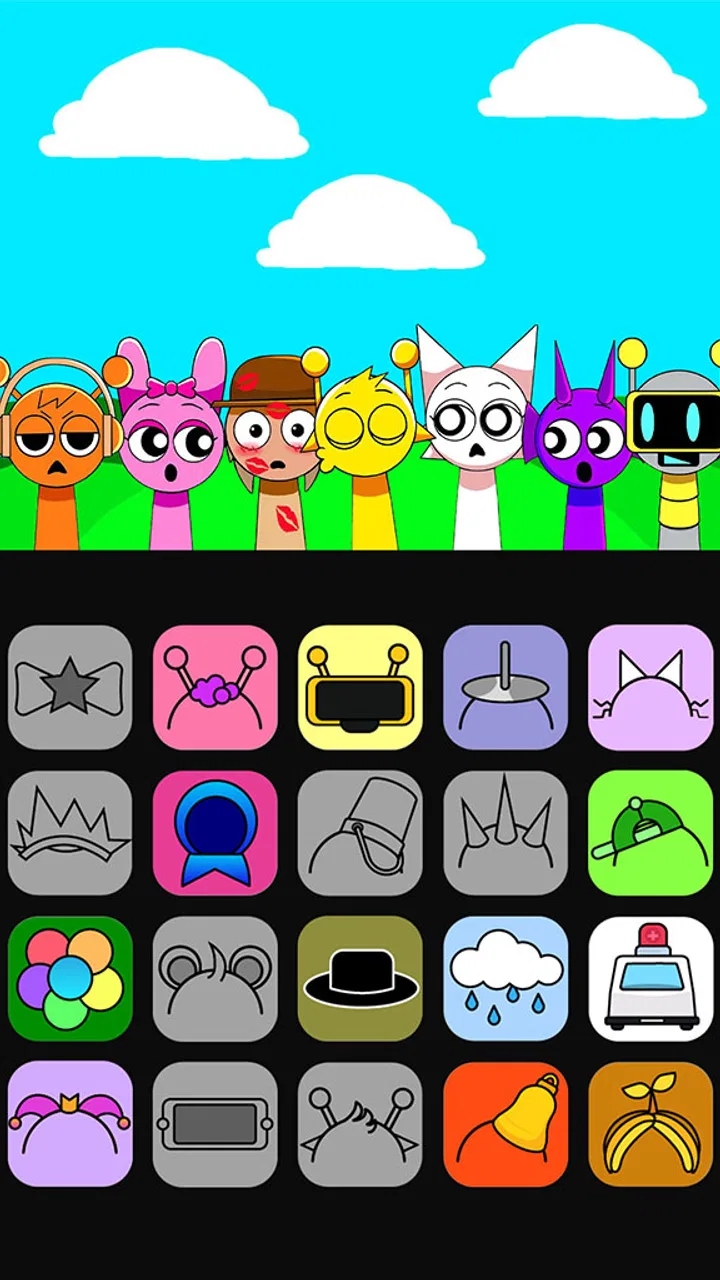
I approached Sprunki Monster Music Beats as a quick music game rather than a serious production tool, and that distinction matters from the first minute. Its appeal is the simple idea of jamming with Sprunki Monster: you arrange and interact with musical elements in a playful setting, then listen to the result develop. I found it easiest to enjoy when I stopped expecting a full digital audio workstation and treated it as a hands-on rhythm toy for short sessions.
That makes the game a good candidate for anyone who wants something musical without studying scales, reading notation, or learning a complicated interface. It is free, made by Dinosaur House, and sits in the music section of mobile games. The audience label is Teen, so I would still check whether its tone and presentation suit a younger player before handing over a device.
What to consider before choosing this music game
The first decision is whether you want to create a mood or master a skill. Traditional rhythm games usually test timing, while mobile music makers often focus on loops, instruments, or recording. This game sits closer to the playful arrangement side. I enjoyed the sense of building something by making choices, but anyone looking for detailed control over pitch, tempo, mixing, or exported tracks may feel restricted.
You May Also Like

 Blood Strike: 2.5 Anniversary
Blood Strike’s Loadouts Turn Every Drop Into a Tactical Gamble
A close look at Blood Strike’s custom loadouts: how fast access to signature weapons reshapes its battle royale rhythm, rewards preparation, and narrows the gap between fights.

 Pandora - Music & Podcasts
Pandora’s Music Is Easy to Start, but Harder to Recover
Pandora’s strength is its low-effort path from a seed to a station. Its weak spot is how much confidence it asks you to place in connection, setup, and quiet recovery.

 8 Ball Pool
 Is Built on Rivalries, Rematches, and Routine
A close look at the rivalries, rematches, shared routines, and unanswered safety questions that turn a quick pool match into a persistent mobile community.

 Samsung Music
’s Quiet Strength Is Playing What You Already Own
Its reach comes less from spectacle than from dependable access to a personal library. That simplicity is both the app’s strongest retention engine and its ceiling.

 AccuWeather: Weather Radar
AccuWeather Review: A Quick, Clear Forecast for Everyday Decisions
For everyday plans, the best forecast is the one you can understand quickly. AccuWeather makes rain timing, radar, and local conditions easy to act on, with a few trade-offs.

 Hill Climb Racing
Why Hill Climb Racing Still Turns Crashes Into One More Run
A tiny car, a bumpy hill and one more upgrade: Hill Climb Racing keeps resurfacing because its simple chaos makes every near-miss feel personal.
More From Our News Desk



The second question is how you plan to play. It works best in small bursts: during a break, while waiting, or when you want a relaxed activity that still responds to your decisions. I would not choose it as my main game for a long commute if I wanted a deep progression system, nor would I replace a dedicated music app with it. Its strength is immediate interaction, not a professional workflow.
Device compatibility is fairly broad because it runs on Android 7.0 and later. That is useful if you are reviewing an older phone or installing it on a family tablet that cannot handle newer software. The current release is version 1.0.31, so I would keep the app updated and allow a little time to become familiar with any interface changes after an update.
Its public reception also suggests that many players find the concept approachable: the game holds a 4.6 average from around 57 thousand ratings and has passed 10 million installs. I see those figures as evidence of broad interest, not proof that every player will enjoy it. Music games divide people quickly; some want freedom and experimentation, while others want precise challenges and clear goals.
How the first sessions feel
I recommend beginning with curiosity instead of trying to discover the “correct” arrangement. Tap through the available musical choices, listen for how they work together, and notice which combinations create a fuller or more amusing result. This is a better introduction than rushing through every option, because the pleasure comes from hearing the arrangement change in response to your input.
One useful habit is to build in layers. Start with the element that gives the scene its identity, add a contrasting sound, and then remove anything that makes the mix feel crowded. That last step is easy to overlook. New players often assume that adding more is always better, but a smaller combination can sound clearer and make the standout parts easier to recognize.
I also found that short experiments are more rewarding than trying to perfect one arrangement immediately. Make one version that feels energetic, another that is calmer, and then compare them by ear. This turns a simple session into a small creative exercise and helps you understand the game’s responses without needing technical music vocabulary.
Where it wins over ordinary alternatives
Against a conventional rhythm game, its biggest advantage is the reduced pressure. You are not mainly chasing a perfect sequence of taps or trying to survive a difficult chart. That makes it more welcoming when I want to play with sound while relaxing. Someone who normally avoids rhythm games because of fast input demands may find this approach less intimidating.
Compared with a general music-making app, the game is also easier to approach. A production app can offer more control, but that control often creates a steep learning curve. Here, the focus stays on the immediate relationship between a choice and the resulting musical atmosphere. I can hand it to a friend and explain the basic idea without giving a lesson about tracks, effects, or file management.
It is particularly effective as a shared activity. In a living room, one person can suggest a combination while another handles the device, then you can swap roles. With children or teenagers, I would use it as a conversation starter about rhythm and arrangement rather than presenting it as a substitute for formal lessons. The Teen content rating is worth keeping in mind when deciding whether that setting is appropriate.
Another quiet strength is its low commitment. Because it is free, the decision to try it does not require buying a music course or committing to a subscription. That makes it a sensible first stop for somebody curious about interactive music games. If the idea does not click after a few brief sessions, moving on costs little besides the time spent exploring it.
Small techniques that make experimentation better
My first practical tip is to listen after every meaningful change instead of tapping rapidly through choices. Fast input can make the result difficult to judge, while a slower rhythm of change lets you identify which part added energy, contrast, or clutter. This is especially helpful on a small phone screen, where visual cues can compete with the sound.
My second tip is to use the game as a mood exercise. Before starting, choose a simple target such as playful, busy, mellow, or strange. Then select elements that support that target and remove choices that pull the arrangement in another direction. This gives the session a purpose without turning it into a score-based task.
My third tip is to treat headphones as a comparison tool rather than an automatic upgrade. They can make individual parts easier to notice, but a combination that sounds exciting in headphones may feel too dense through a phone speaker. I like checking a result both ways when possible, especially if I am making something to play for another person.
A fourth useful approach is to show the game to someone who does not usually play mobile games. The simple musical premise gives them a natural way to participate, but I would avoid taking over and making every decision. Letting a new player choose the next element reveals whether the interface communicates clearly without constant explanation.
Where another type of app may fit better
This is not the right choice if your main goal is learning an instrument. It does not replace guided piano practice, guitar exercises, ear training, or a structured theory course. A dedicated educational app will usually be better for lessons, measurable practice, and feedback tied to a specific skill.
It is also a poor substitute for a full music workstation. If you need to record vocals, edit a long arrangement, control individual tracks in detail, or export a finished song for further work, choose software designed around those tasks. The game’s charm depends on keeping the interaction light; adding professional expectations would expose its limits very quickly.
Players who prefer competition may be happier with a timing-focused rhythm game. Those games provide clearer tests of accuracy and often make improvement easy to measure. Here, the reward is more subjective: I decide whether an arrangement feels satisfying. That freedom is relaxing for me, but it may seem vague to someone who wants levels, rankings, or a demanding skill curve.
There is also a difference between novelty and long-term depth. The character and musical presentation can make the first sessions memorable, yet a player who needs a large amount of progression may eventually want something with more modes or a stronger campaign structure. I would choose this for creative breaks, not as the only game installed on a music enthusiast’s phone.
A realistic everyday use case
Imagine having fifteen minutes before an appointment. You do not have enough time to start a story game, and you do not want to open a complicated editor. This is where I think the game makes sense: launch it, try a few combinations, settle on a sound you like, and put the phone away without needing to remember a mission or maintain a long session.
It can also work during a casual gathering. Instead of passing around a competitive game that leaves one person waiting, invite friends to suggest the next musical direction. One person can aim for a lively arrangement, another can intentionally make it unusual, and a third can decide which version is more enjoyable. The activity stays social because the result is something everyone can hear and discuss.
For a parent considering it for a teenager, I would play it first and look at the presentation personally. The Teen label gives a useful starting point, but age ratings are not a replacement for knowing a child’s sensitivities or your household rules. I would also keep the session focused on experimentation rather than assuming the game teaches formal music skills.
What switching from another music game involves
If you are coming from a timing-based rhythm game, the main adjustment is changing what counts as success. You may initially look for a precise beat to hit, then wonder why the experience feels less demanding. Give it a few sessions with the goal of shaping a pleasing combination instead. If you still miss the pressure of accuracy, switching back to a traditional rhythm title will probably be the better decision.
If you are moving from a music-making app, expect to give up detailed editing in exchange for speed. You will not approach the game with the same workflow as a studio tool. The benefit is that you can begin immediately and avoid managing a large project. The cost is that your creative choices remain within the boundaries the game provides.
There is little reason to treat the switch as permanent. I see this as a companion rather than a replacement: use the game when you want playful interaction, then open an educational or production app when you want to practice or build something more controlled. Keeping those purposes separate prevents disappointment and makes each tool easier to appreciate.
Because the game is free, trying it alongside an existing favorite is straightforward. The real cost is attention. If your phone storage is tight or you dislike maintaining several similar apps, decide whether the character-driven presentation and quick musical experiments offer something your current rhythm or music app does not. If they do not, installing it may add clutter rather than value.
My recommendation for different players
I recommend it to casual players who enjoy sound, visual characters, and experimenting without a demanding lesson structure. It is a particularly good fit for short sessions, shared play, and people who find professional music apps overwhelming. The broad install base and strong average rating make it easy to justify a trial, but my recommendation is based more on the focused style of play than on popularity.
I would recommend caution to players who need explicit goals. Before committing to it as a main game, ask yourself whether you enjoy making subjective choices or whether you need scores and precise feedback to stay interested. If you need the latter, a competitive rhythm game will likely provide a stronger reason to return.
I would also steer musicians toward using it as a warm-up or creative diversion, not as their central tool. It can help you think about contrast, layering, and mood in an informal way, but it should not be mistaken for practice software or a recording environment.
After spending time with it, my view is clear: choose this game for accessible musical play, not for professional control or rigorous training. Dinosaur House has made something that is easy to sample and pleasant to revisit when I want a small creative break. The best results come from listening carefully, trying fewer combinations, and accepting that the fun is in shaping a moment rather than completing a demanding musical task.
For me, that is enough to keep it installed. I would open it when I want a friendly, low-pressure way to interact with music, and I would move to a dedicated rhythm, learning, or production app whenever my goal becomes more specific. That clear boundary is the key to enjoying Sprunki Monster Music Beats on its own terms.
FAQs for Sprunki Monster Music Beats
01What is Sprunki Monster Music Beats?
Sprunki Monster Music Beats is an engaging rhythm-based game where players interact with various music tracks. The game combines catchy tunes with vibrant graphics, allowing players to tap along to the beat. It's designed for both casual gamers and music enthusiasts who enjoy immersive, musical challenges.
02How do you play Sprunki Monster Music Beats?
In Sprunki Monster Music Beats, players must tap, swipe, and hold notes that appear on the screen in sync with the music. The game offers multiple difficulty levels, catering to both beginners and advanced players. Success in the game depends on timing, rhythm, and the player's ability to follow the beat accurately.
03What are the main features of the game?
Sprunki Monster Music Beats boasts a variety of features including a wide selection of music tracks across different genres, vibrant and colorful graphics, multiple difficulty levels, and an engaging gameplay experience. Players can also unlock new songs and themes as they progress, keeping the game fresh and exciting.
04Are there in-app purchases in Sprunki Monster Music Beats?
Yes, Sprunki Monster Music Beats offers in-app purchases. Players can buy additional song packs, themes, and other customization options. While the basic game is free to play, these purchases can enhance the gaming experience by providing more content and personalization opportunities.
05Is Sprunki Monster Music Beats available on both Android and iOS?
Yes, Sprunki Monster Music Beats is available for download on both Android and iOS platforms. Players can find the app on the Google Play Store and the Apple App Store, making it accessible to a wide audience. Ensure your device meets the app's system requirements for optimal performance.
Pros
- Engaging rhythm-based gameplay experience.
- Vibrant and colorful visual design.
- Wide variety of music tracks to enjoy.
- User-friendly interface for easy navigation.
- Regular updates with new content.
Cons
- Requires a stable internet connection.
- In-app purchases can be costly.
- Limited offline play options available.
- Ads can be intrusive and frequent.
- Some tracks require unlocking through play.

Sprunki Monster Music Beats
Gallery